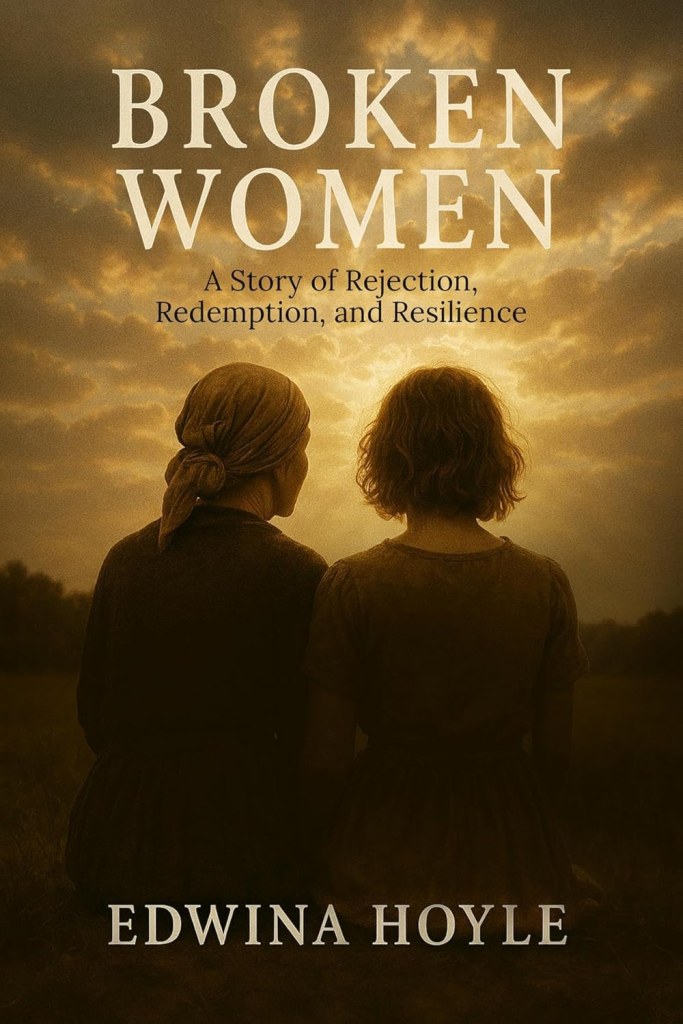
Trauma does not begin and end with one person. It lingers, it echoes, and often, it is inherited. In many families, pain is passed down quietly through behaviors, silence, and emotional wounds that were never healed. Few novels explore this reality with the depth and emotional clarity found in Broken Women. As a powerful generational trauma book, this novel examines how inherited suffering shapes women’s lives and how healing begins when someone dares to break the cycle.
Understanding Generational Trauma in Women
Generational trauma, also known as inherited trauma, refers to psychological wounds that are passed from one generation to the next. These wounds often stem from abuse, neglect, war, poverty, or deep emotional suffering. While the original event may belong to one generation, its emotional consequences are felt by the next.
In Broken Women, generational trauma in women is not treated as an abstract concept. Instead, it is lived through the characters of Ona and her daughter Marita. Their relationship forms the emotional core of the story, revealing how trauma can transform a victim into someone who unintentionally inflicts pain on others.
Ona: The Unhealed Mother
Ona, a Lithuanian woman hardened by years of abuse and hardship, represents a woman living with inherited trauma that was never processed. Her life is defined by survival, not healing. As a result, the love she should offer her daughter becomes distorted by bitterness and emotional distance.
Through Ona, the novel shows how women living with trauma may repeat harmful patterns without realizing it. Her cruelty toward Marita is not born from evil but from unresolved pain. This portrayal adds complexity to the story and highlights an important truth: trauma often manifests as behavior rather than memory.
In many ways, Ona symbolizes the silent suffering of countless women whose emotional wounds were never acknowledged. The novel refuses to simplify her into a villain. Instead, it portrays her as a tragic figure shaped by inherited trauma she never learned to confront.
Marita: Breaking the Cycle
While Ona embodies unhealed trauma, Marita represents the possibility of transformation. As the central figure in this generational trauma book, Marita’s journey is one of awareness and growth.
Sent to America as a teenager, Marita carries her mother’s emotional scars across the ocean. She struggles with insecurity, fear of abandonment, and a deep longing for love. These patterns reflect the inherited trauma she absorbed during childhood.
One of the most powerful moments in Broken Women occurs when Marita looks into a mirror and briefly sees her mother reflected back at her. This symbolic scene captures the essence of generational trauma in women the fear of becoming what hurt you. It is in this moment of recognition that Marita begins to understand that breaking the cycle requires forgiveness and conscious change.
Her decision to love her children unconditionally, even after devastating loss, marks a turning point. By choosing compassion over bitterness, she interrupts the legacy of pain. In doing so, the novel offers a message of hope: inherited trauma does not have to define the future.
Immigration and Trauma
Another compelling layer of Broken Women is the intersection between immigration and inherited trauma. Marita’s journey from Lithuania to America is not just geographical; it is emotional.
Immigration often represents escape, but it does not erase psychological wounds. The novel portrays how women living with trauma carry their histories into new environments. Marita’s struggle to adjust to life in America, while navigating love, betrayal, and loss, reinforces the idea that generational trauma travels with us until it is addressed.
By placing inherited trauma within the broader context of immigration, the book adds depth to its exploration of resilience and identity.
Why Broken Women Stands Out as a Generational Trauma Book
Many novels explore family conflict, but Broken Women stands out because it centers specifically on generational trauma in women. It does not focus solely on dramatic events; it highlights the subtle emotional patterns that shape relationships across time.
The novel emphasizes:
• The psychological inheritance of abuse
• The complexity of mother daughter relationships
• The emotional cost of silence
• The power of forgiveness in healing inherited trauma
Rather than offering easy resolutions, the story acknowledges the difficulty of confronting painful legacies. Yet it also insists that change is possible.
A Story for Women Living With Trauma
At its heart, Broken Women is a tribute to women who have endured emotional wounds passed down through generations. It recognizes that trauma often operates quietly, influencing self-worth, relationships, and identity.
For readers searching for a meaningful generational trauma book, this novel provides both recognition and reassurance. It validates the experience of women living with trauma while offering a path toward healing.
By portraying inherited trauma with honesty and emotional depth, Broken Women invites readers to reflect on their own family histories. More importantly, it reminds us that while trauma may be inherited, resilience can be chosen.